

The biblical meaning of your name is not a coincidence — it is a divine fingerprint woven into your identity before you ever drew your first breath.
There is a quiet moment many believers experience — sitting in prayer, reading Scripture, or simply pausing in the stillness of an ordinary day — when a deep, almost aching question rises to the surface: Does my name mean something to God? That longing is not trivial. It is the soul recognizing that names, in the biblical world, were never mere labels. They were declarations. They were prophecies. They were the first gift a child received, and in God’s economy, gifts carry weight.
This article walks you through the rich, layered world of biblical name meanings — what the original Hebrew and Greek roots reveal, how God Himself renamed people at pivotal moments, and what the spiritual significance of your name might say about the purpose written over your life. Whether you are searching for the biblical meaning of your name out of curiosity or out of a genuine hunger to understand your calling, what follows will meet you with both depth and warmth.
Lord, meet and bless every reader here and grant them success in every area of their life.
Key Takeaways
- The biblical meaning of your name often carries Hebrew or Greek roots that reveal character, destiny, or divine purpose
- God renamed key biblical figures — Abraham, Sarah, Peter, and Israel — to mark spiritual transformation
- Names in Scripture functioned as living prophecies, not passive identifiers
- Understanding the spiritual significance of your name can deepen your faith, your prayer life, and your sense of God-given identity
What Is the Biblical Meaning of a Name?
In modern Western culture, names are chosen for how they sound, family tradition, or personal preference. In the biblical world, names were chosen for what they meant. A name was a covenant statement. It announced who a person was, what they carried, and sometimes what they would become. The Hebrew word for name — shem — carries within it the idea of breath, reputation, and mark. To name something was to define its essence.
When God created the animals in Genesis 2, He brought them before Adam not for admiration but for naming. Adam’s act of naming was an act of stewardship and discernment — recognizing the nature of each creature and declaring it aloud. This was not poetry. It was authority. And it established a biblical pattern: names reveal nature.
This is why the biblical meaning of your name matters spiritually. It connects you to a tradition that stretches across millennia, in which the weight of a name carried the weight of a life.
The Hebrew and Greek Roots Behind Biblical Names
Most names with deep biblical resonance trace back to either Hebrew or Greek origins, and understanding those roots opens a remarkable window into Scripture.
Hebrew names frequently draw from verbs. David comes from a root meaning beloved or cherished — dod — which explains why David was described as a man after God’s own heart. Hannah derives from hanan, meaning grace or favor, which is precisely what she sought and received in her prayer at the temple. Elijah combines El (God) and Yah (the sacred name Yahweh), declaring boldly: My God is the Lord.
Greek names, which dominate the New Testament, carry their own theological weight. Peter comes from petros, meaning rock — a name Jesus gave to Simon as a declaration of destiny, not a description of where he stood at the time. Timothy means one who honors God. Lydia, the businesswoman whose heart God opened in Acts 16, carries a name rooted in a region, yes, but symbolically connected to beauty and nobility.
If your name appears directly in Scripture or shares its root with a biblical name, you are holding in your identity a thread that runs all the way back to the ancient covenant world. For an in-depth look at original Hebrew and Greek name etymologies, the Blue Letter Bible lexicon is one of the most trusted scholarly resources available online.
God Renamed People at Turning Points — And That Changes Everything
One of the most spiritually significant patterns in all of Scripture is this: when God was about to do something new in a person’s life, He often gave them a new name.
Abram became Abraham. His original name meant exalted father, but God renamed him Abraham — father of a multitude — before a single child had been born. The new name was not a reward. It was a declaration of faith, spoken into a future that looked biologically impossible.
Sarai became Sarah. Both names carry the meaning of princess or noble woman, but the shift marked her inclusion in the specific covenant promise. Her identity was being re-clarified in light of what God was doing.
Jacob became Israel. This transformation came after a night of wrestling — physically and spiritually — with the divine. Jacob, which can mean supplanter or one who grabs the heel, was replaced with Israel: one who strives with God and prevails. His struggle was not punished. It was honored with a name.
Simon became Peter. Jesus looked at a fisherman and saw a foundation stone. The name change was a prophetic act — announcing what Peter would become through the work of the Spirit.
The spiritual significance of your name may not require a divine renaming. But these stories remind us that God sees names as alive, as changeable when transformation demands it, and as deeply connected to purpose.
Keep Feeding Your Faith: Biblical Meaning of Baby Names: The Complete Guide to 200+ Hebrew & Greek Names, Their Stories, and the Destiny They Declare
The Spiritual Significance of Your Name in Your Own Faith Walk
How should a believer engage with the biblical meaning of their name in a personal, practical way? Not with superstition. Not with the belief that a name alone seals a fate. But with prayerful openness to what God may have placed within the meaning as a seed.
Consider the practice of meditating on your name’s root meaning in prayer. If your name means light, sit with Psalm 27:1 — The Lord is my light and my salvation. If your name means strength, let Isaiah 40:31 breathe into that root. If your name means grace, let the entire arc of the New Testament speak to you differently.
The biblical name meaning you carry is not a horoscope. It is not a guarantee of a personality type. It is an invitation — to seek, to ask, to pray: Lord, what did You intend when this name was placed over my life?
Many believers have found that exploring the Christian name meaning behind their own name unlocks a deeper sense of calling and spiritual grounding. It is one of the quieter, more personal forms of biblical study — and one of the most surprisingly moving.
Names That Appear Directly in the Bible and Their Meanings
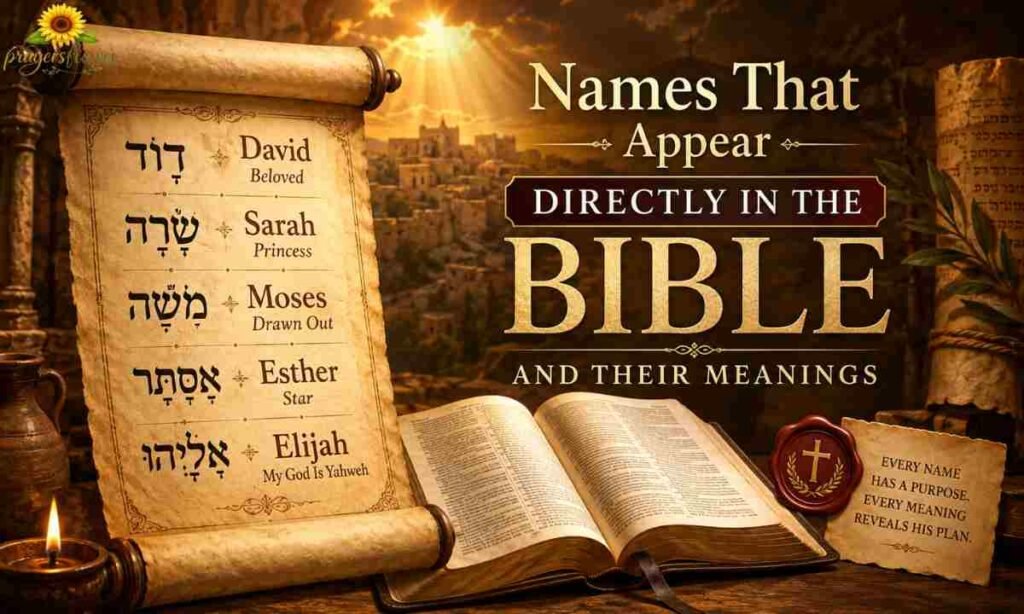
Here is a selection of common names and their biblical meaning, drawn from Hebrew and Greek roots:
Michael — Who is like God? A rhetorical declaration of God’s incomparability, carried by the archangel who stands as heaven’s warrior.
Mary / Miriam — Rooted in Hebrew, possibly meaning beloved, bitter, or rebelliousness transformed by grace. Mary, the mother of Jesus, redeemed this name into one of the most honored in Christian history.
Daniel — God is my judge. A name that embodies complete trust in divine justice over human verdict — which makes Daniel’s story of refusing to bow to earthly powers all the more resonant.
Grace / Hannah — Both names orbit the same Hebrew root hanan — unearned favor, divine kindness extended to the undeserving.
John / Yohanan — God is gracious. The name carried by the forerunner of Christ, the beloved disciple, and the writer of Revelation — three wildly different men, all pointing to the same gracious God.
Joshua / Jesus — Both are forms of the same name: Yeshua, meaning God saves or the Lord is salvation. Every time you say the name Jesus, you are speaking a theology.
Nathanael — Gift of God. When Jesus saw Nathanael approaching, He said, Here is a true Israelite in whom there is no deceit. The man’s name and character aligned perfectly.
Names Without a Direct Biblical Reference — Are They Spiritually Meaningful?
This is a question that deserves an honest answer. Not every name held by a believer today appears in the Bible. Does that mean those names carry no spiritual meaning?
Not at all.
The biblical principle is not that only names found in Scripture carry value. The principle is that God sees and knows His children by name — all of them. Isaiah 43:1 does not say I have called you by a biblically certified name. It says: I have called you by name. You are Mine.
If your name is not found in Scripture, you can still explore its etymological roots and bring those to God in prayer. A name meaning strength of the sea or morning light or noble guardian can still become a point of spiritual reflection when held before the Lord.
What matters is not that your name is ancient Hebrew. What matters is that the God who named the stars knows yours.
How Names Shape Identity: A Biblical Psychology of Naming
The significance of names in shaping identity runs deep through both Scripture and human experience. In Proverbs 22:1, Solomon writes that a good name is more desirable than great riches. He was speaking of reputation — but reputation begins with how a name is inhabited.
Research in developmental psychology echoes what Scripture intuited thousands of years ago: people tend to grow into the meanings and expectations attached to their names and identities. In the biblical world, this was not left to chance. Parents named children prophetically. Noah — meaning rest or comfort — was named by his father Lamech, who said, He will comfort us in the labor and painful toil of our hands. Lamech was naming a destiny.
When you understand the spiritual significance of your name, you are not indulging in mysticism. You are participating in a long, holy tradition of taking identity seriously — recognizing that how you are called shapes how you answer.
Praying With the Meaning of Your Name
One of the most underused spiritual practices in the modern church is praying with the meaning of your name as a starting point.
Begin simply. Look up the biblical or etymological root of your name. Sit with it. Ask God: Is this a seed You planted? What does it mean for how I live?
If your name means warrior, pray into Ephesians 6 and the armor of God. If it means peace, steep yourself in Philippians 4:7. If it means vine or fruitful, John 15 becomes deeply personal.
This is not name worship. It is name stewardship — taking what you have been given and returning it to God in conversation. It is the quiet, daily practice of asking Him to make the meaning of your name true in your life.
FAQs
What is the biblical meaning of your name and why does it matter?
The biblical meaning of your name reveals the spiritual roots and divine intention woven into your identity, helping you align with God’s purpose for your life.
How do I find the Hebrew meaning of my name in the Bible?
Use a trusted biblical lexicon like Blue Letter Bible or Strong’s Concordance to trace your name back to its original Hebrew or Greek root word.
Did God change names in the Bible to show spiritual transformation?
Yes — God renamed Abraham, Sarah, Jacob, and Peter at key turning points to declare new identity, covenant purpose, and spiritual destiny.
Does my name need to be in Scripture to have a spiritual significance?
No — God calls every believer by name as stated in Isaiah 43:1, and the etymological roots of any name can carry meaningful spiritual significance before Him.
What does it mean to pray with the biblical meaning of your name?
It means meditating on your name’s root meaning alongside related Scripture, inviting God to make that meaning spiritually alive and purposeful in your daily walk.
Conclusion
The biblical meaning of your name is more than a footnote in a baby name book — it is a thread stitched into the fabric of your God-given identity. From Abraham to Peter, Scripture shows us that names carry destiny, and that the God who calls stars by name calls you by yours with the same intentionality and love.
Seek the meaning behind what you have been called. Bring it before God in prayer, let it deepen your understanding of His Word, and trust that the One who formed you before you were born knew exactly what to name the person He was making.
God, may whoever carries this name feel the weight of Your presence every time they come to You in prayer.

John Carrol is a Christian writer and prayer minister with over a decade of experience in faith-based content, devotional writing, and spiritual encouragement. Rooted in Scripture and a lifelong love of intercessory prayer, John created PrayersFlower to help believers find the right words when their own run out. His writing draws from pastoral study, personal faith practice, and a deep conviction that prayer is the most powerful act available to the human heart. When he is not writing, John is found in quiet study of the Word, mentoring young believers, and serving his local church community.