

The biblical meaning of the name Peter carries one of the boldest transformations in all of scripture, turning a rough Galilean fisherman into the rock Jesus Himself named him to be. Across American Christian families, the biblical meaning of a name like Peter often becomes the anchor for a deeper Bible study discussion, the kind pastors unpack from the pulpit and parents revisit again around the dinner table, shaping how faith is lived out daily.
Whether you’re researching the name for a baby boy, studying Simon Peter’s journey through the Gospels, or simply curious what does Peter mean in its original Greek and Aramaic forms, this guide unpacks it all in one place. From his call as a fisherman on the Sea of Galilee to his identity as the rock of the church, here is the full, Bible-based picture of who Peter was — and what his name still means today.
The Fisherman Whose Name Was Changed by Jesus
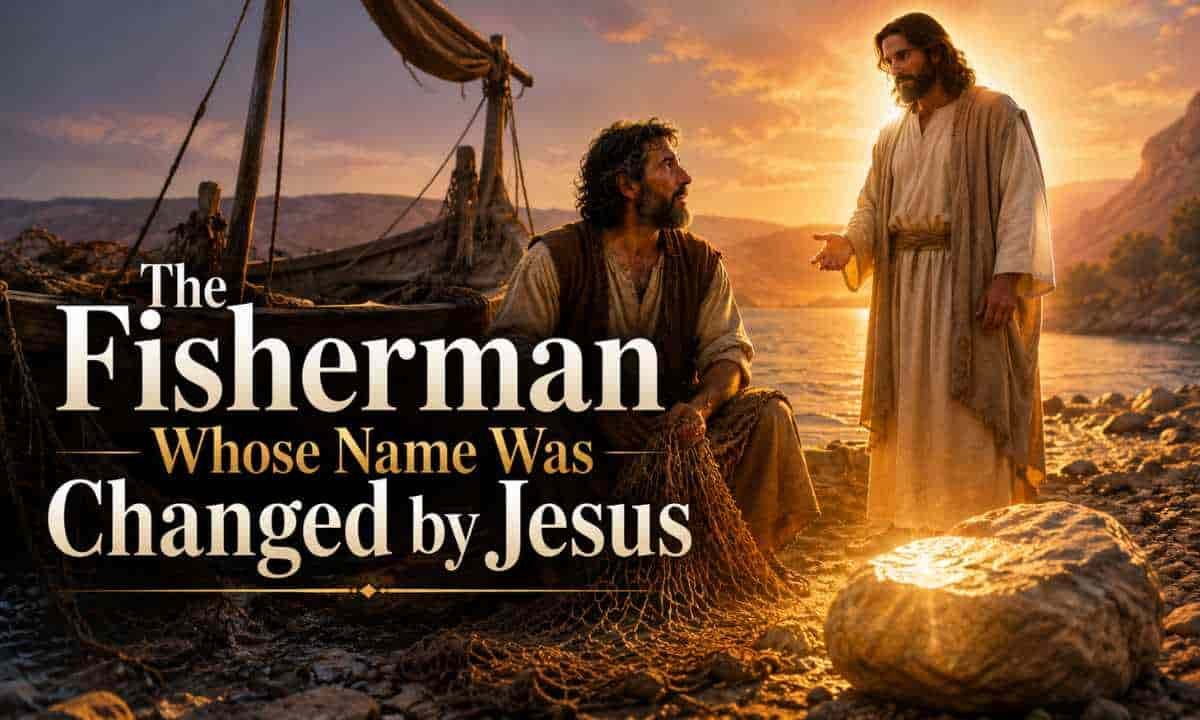
Before he carried the weight of a new name, Peter was just a man mending nets before sunrise, worried about the next catch and the mouths waiting at home. This section walks through the ordinary life Jesus interrupted the moment He gave Simon a new identity.
Simon, son of Jonah, spent his days on the Sea of Galilee the way generations of his family had before him — hauling nets, repairing torn rope, and hoping the morning’s catch would cover more than just today’s needs. He wasn’t a religious scholar, a priest, or a man anyone expected greatness from; he was tired, calloused, and probably a little skeptical when a traveling rabbi called out to him from the shore. That rabbi was Jesus, and the invitation He gave — “Follow me, and I will make you fishers of men” (Matthew 4:19, KJV) — changed the trajectory of Simon’s entire life in a single sentence.
What makes the biblical meaning of the name Peter so striking is exactly this contrast: Jesus didn’t wait for Simon to become someone impressive before renaming him. He saw the man arguing with his brother Andrew over torn nets and called him a rock anyway. For anyone who has ever felt unqualified for what God is calling them toward — a new season, a new ministry, a new chapter of Christian life — Peter’s story offers something deeply personal, not just historical.
What Does Peter Mean in Greek and Aramaic
Names carried real weight in the ancient world, and Jesus didn’t choose Peter’s new name by accident. Understanding the original language behind it changes how you read every story that follows.
The Greek meaning of Peter comes from Petros (Πέτρος), a word tied directly to petra, meaning “rock” or “large stone.” For readers simply asking what does Peter mean at its core, the short answer is rock — but the fuller Peter name meaning only comes alive once you see how Jesus used that identity to build something no storm could shake. You can explore the full Greek word study on Blue Letter Bible’s Strong’s Concordance entry for Petros if you want to dig into the original manuscripts yourself.
Peter Greek Meaning
In koine Greek, the language the New Testament was written in, Petros specifically describes a rock or large stone — something firm and immovable, not a shifting pebble underfoot. Jesus used this exact word intentionally in Matthew 16:18 when He renamed Simon, tying the disciple’s very identity to permanence and stability. This is the linguistic root behind the entire Peter Greek meaning tradition that Bible scholars and Sunday school teachers alike still reference today.
Cephas Aramaic Peter
Before Petros ever entered the conversation, Jesus most likely spoke to Simon in Aramaic, the everyday language of first-century Galilee, calling him Cephas — a word that also translates to “rock.” John 1:42 records this moment directly, noting that Jesus looked at Simon and told him he would be called Cephas, “which is by interpretation, A stone.” Paul later uses this same Aramaic title for Peter in several of his epistles, showing how naturally the two names — Cephas Aramaic Peter and the Greek Petros — were used interchangeably in the early church.
Pete Nickname Meaning
In modern usage, Pete has become the casual, everyday shortening of Peter, common in American homes, classrooms, and even church directories. While Pete carries the same rock-solid root meaning, it tends to feel more relaxed and familiar — the kind of name a grandfather goes by at the fishing hole or a coworker uses over coffee after Sunday service. Even in its shortened form, the name never fully loses its biblical backbone.
Peter in the Bible — From Simon to Cephas to Peter
Peter didn’t receive his new name and instantly become fearless — his story in scripture is full of stumbling, learning, and slow transformation. Tracing his journey through the Gospels shows exactly how gradual real faith growth can be.
The Peter biblical meaning isn’t found in one dramatic verse alone; it’s woven through years of Gospel narrative, from his first meeting with Jesus by the water to his leadership in the earliest church. Reading his story from start to finish is the clearest way to understand the full weight of his new Christian name.
Simon Peter Bible
Throughout the Gospels, Peter is referred to by several names — Simon, Simon Peter, Cephas, and Peter — often within the very same chapter, reflecting both his old identity and the new one Jesus was calling him into. This dual naming shows up more than 150 times across the New Testament, more than any other disciple besides Jesus Himself, underscoring just how central Simon Peter Bible references are to understanding the early church’s foundation. Reading these passages side by side helps modern believers see that spiritual growth rarely erases the past — it builds on top of it.
Peter and Paul Relationship
Peter and Paul, two of the most influential leaders in the early church, didn’t always see eye to eye, and Galatians 2 records a direct, public disagreement between them over how Gentile believers should be treated. Yet despite this friction, both men remained committed to the same gospel, and 2 Peter 3:15 shows Peter speaking warmly of “our beloved brother Paul.” Their relationship is a real, human reminder that even spiritually mature Christian leaders can disagree strongly and still walk in unity toward the same calling.
Peter’s story takes place in the New Testament, where the apostles repeatedly encountered Jesus and witnessed His ministry; another important biblical name from this period is explored in Biblical Meaning of the Name Elias.
Peter Walking on Water — Matthew 14
Few Bible stories capture the tension between faith and fear as vividly as the night Peter stepped out of a boat during a storm. It’s a moment American Christians still preach on because it mirrors exactly what doubt feels like mid-step.
In Matthew 14 Peter is the only disciple who asks to leave the safety of the boat, calling out to Jesus in the middle of a violent storm, “Lord, if it be thou, bid me come unto thee on the water” (Matthew 14:28, KJV). For a few remarkable steps, Peter walking water actually happens — his feet stay above the waves as long as his eyes stay fixed on Jesus rather than the wind around him.
The moment turns the instant Peter notices the storm instead of the Savior, and he begins to sink, crying out, “Lord, save me” (Matthew 14:30, KJV). Jesus catches him immediately, and this single, brief failure becomes one of the most relatable pictures in scripture of what it feels like to take a step of faith, get distracted by circumstances, and still find Jesus reaching for you before you go under. It’s not a story about failure — it’s a story about a Savior who is faster than the sinking.
Peter’s Denial and Restoration — John 18 and 21
This is the part of Peter’s story most people quietly relate to — not the miracles, but the moment he failed the person he loved most. What happens next is where the real hope lives.
Peter Denied Jesus
On the night of Jesus’s arrest, fear got the better of the same disciple who once confidently walked on water, and Peter denied Jesus three times before a rooster crowed, just as Jesus had predicted (Luke 22:34, 61). Scripture doesn’t soften this moment or make excuses for Peter — it records his tears afterward plainly, letting the weight of the failure sit in full view. For readers who’ve ever denied their faith through silence, shame, or self-protection, Peter’s collapse in the high priest’s courtyard feels uncomfortably familiar.
Peter Restoration John 21
Rather than ending Peter’s story in shame, John 21 shows the resurrected Jesus meeting Peter on a beach and asking him three times, “Simon, son of Jonah, lovest thou me?” — one question for every denial. Each time Peter answers yes, Jesus responds with a commission, not a lecture: “Feed my sheep.” This exchange, central to the Peter restoration John 21 narrative, is one of the clearest pictures in the New Testament that God’s calling on a person’s life doesn’t expire the moment they fail Him.
Peter as Rock of the Church — Matthew 16:18
This is the verse the whole name is built on — the moment Jesus renames Simon and declares what he will become. It’s also one of the most debated verses in church history.
In Matthew 16:18 rock imagery becomes central to Peter’s entire identity when Jesus declares, “Thou art Peter, and upon this rock I will build my church; and the gates of hell shall not prevail against it” (KJV). Bible scholars across denominations continue to debate exactly what the Peter rock church declaration means — whether Jesus was building on Peter himself, on Peter’s confession of faith, or on Christ as the ultimate cornerstone — but nearly all agree the moment marks a turning point for the early church and for Peter Christian name usage across two thousand years of Christian history.
Peter Means Rock
At its simplest, Peter means rock — a name chosen not for how Simon was behaving in that moment, but for the foundation Jesus saw he would eventually become. This is one of the clearest examples in scripture of God naming someone according to their destiny rather than their current condition, a principle many American Christian parents still lean on when naming their own children today.
Peter First Pope
In Catholic tradition, Matthew 16:18 forms the biblical basis for recognizing Peter first pope, the foundation of apostolic succession that traces the papacy back to this exact moment. Baptist, Pentecostal, and non-denominational readers often interpret the same verse differently, focusing more on Peter’s confession of faith than on institutional office. Either way, the passage remains one of the most historically significant verses connected to any name in the entire Bible.
Like Peter, many biblical names carry meanings that add depth to the story and character of the person who bears them, as explored in Biblical Meaning of the Name Joseph.
Peter Name Personality Traits
Parents searching this name today aren’t just curious about ancient history — they want to know what kind of character the name still carries. Scripture actually gives a surprisingly clear answer.
Looking at Peter name personality traits through the lens of scripture, one pattern shows up again and again: boldness. Peter was almost always the first disciple to speak, the first to act, and often the first to get it wrong — but also the first to repent and grow from it.
Peter Spiritual Meaning
Spiritually, the name carries a picture of transformation under pressure — someone who starts impulsive and ends up steady, someone who fails publicly and still becomes foundational. The Peter spiritual meaning many pastors highlight in sermons is this: God isn’t looking for people who never stumble, He’s looking for people willing to keep following Him after they do.
Famous Christians Named Peter
Throughout church history, famous Christians named Peter have carried forward this same theme of bold, sometimes flawed, deeply devoted faith — from Peter Waldo, the medieval reformer, to countless modern-day pastors, missionaries, and everyday believers who share the name. Many parents choosing this name for their son today are drawn to that same legacy of resilience.
Peter Baby Boy Name
As a Peter baby boy name choice, it remains consistently popular across Catholic, Baptist, and non-denominational families alike, valued for its strong sound and even stronger biblical backstory. Parents often say they chose it specifically because they wanted their son to carry a name tied to both humility and unshakable faith.
Bible Verses to Declare Over Someone Named Peter

If you’re praying over a son, grandson, or friend named Peter, scripture gives you real words to stand on — not just sentiment. These verses turn the name itself into a quiet, daily prayer.
Declaring scripture over a name is rooted in real Peter name destiny thinking — the belief that God speaks identity and purpose over people, the same way He did over Simon by the water.
Peter Name Declaration
Speak Matthew 16:18 directly over him: “Thou art Peter, and upon this rock I will build my church; and the gates of hell shall not prevail against it.” Declare that whatever storms rise against his faith, they will not overcome what God is building in him.
Peter Name Prayer
Lord, just as You saw the rock in Simon before he ever saw it in himself, we ask You to see and strengthen that same steadiness in Peter’s life today. When fear tempts him to sink like it did on the water, remind him to fix his eyes on You and reach for Your hand before he calls out. In every season, root him in Your truth so his faith becomes something others can stand on too, in Jesus’s name, amen.
Peter Name Blessing
May the boldness that once got Simon out of the boat become the same boldness that carries this Peter into every calling God has for him. May his failures, when they come, always lead him back to restoration rather than shame, just as they did for the first Peter. And may his life quietly declare, the way the original Peter’s did, that God can build something unshakable out of anyone willing to follow Him.
Did You Know — Peter Was Crucified Upside Down
Church tradition holds one final, sobering detail about Peter’s story that rarely makes it into Sunday school lessons. It says everything about how deeply his faith had rooted by the end of his life.
According to early church historian Eusebius and long-standing Christian tradition, Peter crucified upside down was his final act of devotion — he reportedly asked to be crucified head-down in Rome because he felt unworthy to die in the same manner as Jesus. This detail isn’t recorded in scripture itself, but it has been part of Christian tradition for nearly two thousand years, and it captures, in one final image, just how completely the fisherman who once denied Jesus three times had been transformed into a man willing to die for Him.
Peter became one of the most prominent leaders among Jesus’ disciples, continuing a biblical pattern of God working through people called to positions of leadership, as seen in Biblical Meaning of the Name Aaron.
Frequently Asked Questions
What does the name Peter mean in the Bible?
The biblical meaning of the name Peter is “rock,” from the Greek Petros, given to Simon by Jesus in Matthew 16:18.
Why did Jesus change Simon’s name to Peter?
Jesus changed Simon’s name to Peter to declare the steady, foundational role he would play in building the early church.
What does Cephas mean in Aramaic?
Cephas is the Aramaic form of Peter and also means “rock” or “stone.”
Did Peter really walk on water?
Yes — Matthew 14 records Peter briefly walking on water toward Jesus before fear caused him to sink.
How many times did Peter deny Jesus?
Peter denied Jesus three times on the night of His arrest, exactly as Jesus had predicted.
Is Peter considered the first pope?
Catholic tradition recognizes Peter as the first pope based on Matthew 16:18, though other denominations interpret this verse differently.
What is a good Bible verse for someone named Peter?
Matthew 16:18 is the most fitting verse, since it holds the full biblical meaning of the name Peter and speaks directly to his purpose.
Final Thoughts
The biblical meaning of the name Peter is ultimately a story about becoming who God says you are, not who you currently feel like. From Sunday morning worship to quiet weekday Bible study, Peter’s journey from fisherman to rock keeps showing up in sermons, small groups, and family conversations across every denomination.
Whatever brought you here — a baby name search, a Bible study question, or simply curiosity about Simon Peter’s story — carry this with you: God builds His church on flawed, willing people, not perfect ones. In home church gatherings and hospital chaplain visits alike, Peter’s name still reminds American Christian families that failure is never final when Jesus is doing the building.

John Carrol is a Christian writer and prayer minister with over a decade of experience in faith-based content, devotional writing, and spiritual encouragement. Rooted in Scripture and a lifelong love of intercessory prayer, John created PrayersFlower to help believers find the right words when their own run out. His writing draws from pastoral study, personal faith practice, and a deep conviction that prayer is the most powerful act available to the human heart. When he is not writing, John is found in quiet study of the Word, mentoring young believers, and serving his local church community.