

The biblical meaning of the name Noah is “rest” or “comfort,” a divine declaration woven into his identity before he ever built a single plank of the ark.
There are moments in a person’s faith journey when a name stops being just a label and starts feeling like a message. Maybe you are considering this name for a child, tracing your family’s spiritual roots, or simply sitting with scripture and wondering why God would choose a man named rest to carry the future of all creation. That curiosity is not accidental. Names in the Bible were never decorative — they were prophetic, and Noah’s name is one of the most quietly powerful in all of sacred text.
The biblical meaning of the name Noah opens a window into how God speaks through identity itself. This article walks you through the Hebrew origins of the name, its spiritual significance in Genesis, what it reveals about God’s character, and why this ancient name still carries weight for believers today. If you have ever felt drawn to this name without fully knowing why, you are about to find out.
Lord, meet and bless every reader here, guide them closer to Your heart, and grant them success in every area of their life.
Key Takeaways
- The name Noah comes from the Hebrew root nacham or nuach, meaning “rest,” “comfort,” or “relief from sorrow”
- Noah’s name was prophetically given by his father Lamech, who believed his son would bring relief to a cursed earth
- The biblical meaning of Noah connects deeply to God’s covenant, grace, and the theme of new beginnings after judgment
- Noah is one of only a handful of Old Testament figures described as both “righteous” and walking “with God,” making his name spiritually significant beyond its etymology
The Hebrew Root of the Name Noah
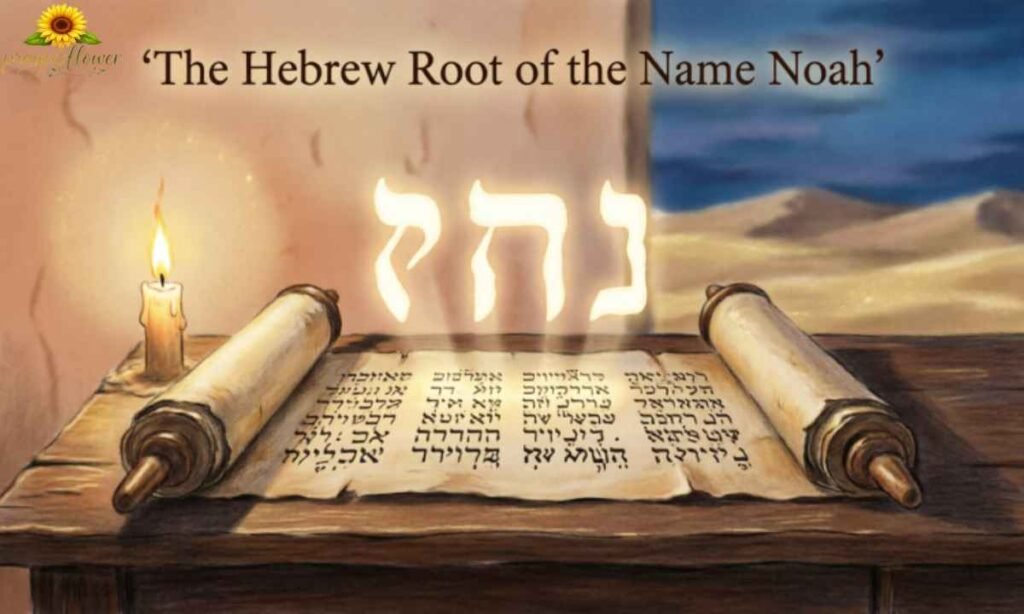
To understand the biblical meaning of the name Noah, you have to start where it was born — in the Hebrew language. The name comes from the Hebrew Noach (נֹחַ), which is rooted in the verb nuach (נוּחַ), meaning to rest, to settle, or to be still. Some scholars also connect it to nacham (נָחַם), meaning to comfort or to bring relief.
This is not a coincidence of linguistics. In the ancient Near Eastern world, a child’s name was a statement of destiny. Parents named their children what they believed God was saying over their lives. When Lamech named his son Noah, he was not simply choosing a pleasant-sounding word. He was making a prophetic declaration recorded in Genesis 5:29: “He will comfort us in the labor and painful toil of our hands caused by the ground the Lord has cursed.”
That single verse tells us everything. The name Noah carried a burden of hope before the flood, before the ark, before the covenant rainbow ever stretched across the sky.
Noah’s Name in the Context of Genesis
The Book of Genesis introduces Noah at a moment when the earth is described as corrupt and filled with violence. God looks upon creation and grieves. Into that darkness, one name appears — Noah. And the text in Genesis 6:8 delivers one of the most powerful sentences in all of scripture: “But Noah found grace in the eyes of the Lord.”
The juxtaposition is deliberate. A world without rest meets a man whose very name means rest. A creation spiraling toward destruction is anchored by someone whose identity is rooted in comfort and stillness. The biblical meaning of Noah is not just about his personal character — it mirrors what God intended to do through him: bring rest to creation, comfort to the grieving earth, and a new beginning to humanity.
This is why biblical name meaning matters. The name was not assigned after Noah proved himself. It was given at birth, as if God was already writing the story.
What “Rest” and “Comfort” Signify Spiritually
Rest in the biblical sense is never passive. It is not the absence of effort — it is the presence of God. When the Hebrew scriptures speak of nuach, they describe a deep settling, the kind of stillness that comes after a long war finally ends. The Sabbath itself is rooted in this same concept of divine rest.
To be named Noah, then, is to carry a spiritual vocation. It means being a person through whom others find relief. Noah’s life embodied exactly that — through his obedience, all of biological life found a passage through judgment into a renewed world.
For believers today, the name is a reminder that God does not always choose the loudest or the most prominent. He chose a man whose name meant quiet, still, rest — and through that man, He changed everything. This dimension of the biblical meaning of the name Noah speaks directly to anyone who has ever felt too ordinary to be used by God.
Noah as a Righteous Man — Character Behind the Name
Genesis 6:9 describes Noah with three remarkable phrases: he was a righteous man, blameless among the people of his time, and he walked faithfully with God. In Hebrew Scripture, to walk with God is one of the highest spiritual accolades a human being can receive. Only Enoch shares this description in the early chapters of Genesis.
His righteousness was not performance. It was relational. Noah’s name meaning — rest and comfort — suggests a man at peace with God even when the world around him was in chaos. He did not panic. He built. He obeyed specific instructions over decades without recorded complaint. That kind of sustained, quiet faithfulness is itself a form of rest — a trust so deep it does not require constant reassurance.
The spiritual meaning of Noah’s name is therefore also a character portrait. It describes who he was, not just what he was called.
Keep Feeding Your Faith: The Biblical Meaning of the Name Olivia
The Ark, the Flood, and the Theme of New Beginnings
The flood narrative is one of the most studied passages in religious history. At its theological core, it is a story about judgment and renewal — but also about rest. When the floodwaters finally recede in Genesis 8:4, the ark rests on the mountains of Ararat. The Hebrew word used there? Nuach — the same root as Noah’s name.
This is sacred wordplay embedded in the original text. The man named Rest brought the ark to rest. The man named Comfort delivered every living creature through the most catastrophic moment in recorded biblical history into a world God would never destroy by flood again. The rainbow covenant that follows in Genesis 9 is a covenant of comfort — God’s promise, wrapped in light, given through a man whose name embodied that very promise from birth.
For deeper exploration of Noah’s covenant and its theological implications, the Biblical Archaeology Society offers rich scholarly context at biblicalarchaeology.org.
Noah in the New Testament — A Name That Echoes Forward
The significance of Noah does not end in the Old Testament. Jesus himself references Noah in Matthew 24:37-38, using his story as a parallel for the end times: “As it was in the days of Noah, so it will be at the coming of the Son of Man.” The reference is not incidental — Jesus invokes Noah as a spiritual archetype of preparedness, faithfulness, and survival through divine judgment.
The Apostle Peter calls Noah a preacher of righteousness in 2 Peter 2:5, expanding his identity beyond the ark-builder to a prophetic voice in a morally collapsing world. The biblical meaning of Noah, then, is not confined to Genesis. It reverberates through the entire canon of scripture as a symbol of grace under pressure, rest amid chaos, and covenant fidelity.
Is Noah a Good Name for a Child — What Believing Parents Consider
Many Christian and Jewish parents today choose the name Noah precisely because of its spiritual weight. It is a name that carries both gentleness and strength — rest is not weakness, and comfort is not compromise. In an age of noise and anxiety, naming a child Noah is a quiet act of faith, a declaration that this child belongs to a God who provides rest for the weary.
The name has also grown in cultural popularity, consistently ranking among the top baby names globally. But for families of faith, the choice goes deeper than trends. The biblical meaning of the name Noah is a spiritual inheritance — a daily reminder of covenant, grace, and the God who walks with those who walk with Him.
Noah Across Faith Traditions — A Name Honored Beyond Christianity

Noah, known as Nuh in Arabic, is also a revered prophet in Islam. The Quran dedicates an entire chapter (Surah Nuh, Chapter 71) to his story, making him one of the most significant prophets in Islamic tradition. In both traditions, his identity is anchored in obedience, warning, and salvation.
In Jewish tradition, the Talmud and Midrash explore Noah’s character extensively — debating whether his righteousness was absolute or relative to his corrupt generation. But all traditions agree on the weight of his name. Whether read as Hebrew, Arabic, or Greek (Noe), the meaning remains rooted in comfort and rest — a universal spiritual longing that transcends denominational lines.
FAQs
What is the biblical meaning of the name Noah?
The biblical meaning of the name Noah is “rest” or “comfort,” drawn from the Hebrew root nuach, and was prophetically given to reflect his role in bringing relief to a cursed earth.
What does Noah mean in Hebrew spiritually?
In Hebrew, the spiritual meaning of Noah (Noach) points to divine stillness and peace — the kind of rest that comes only through walking faithfully with God amid chaos.
Why did Lamech name his son Noah in the Bible?
Lamech named his son Noah because he believed the child would bring comfort and relief from the painful toil caused by God’s curse on the ground, as recorded in Genesis 5:29.
Is Noah mentioned in the New Testament?
Yes — Jesus references Noah in Matthew 24 as a symbol of preparedness before judgment, and Peter calls him a preacher of righteousness in 2 Peter 2:5.
What does the name Noah mean for a baby boy today?
For a baby boy today, the name Noah carries the spiritual meaning of peace, divine favor, and covenant faithfulness, making it one of the most meaningful faith-based names a parent can choose.
Conclusion
The biblical meaning of the name Noah is a testament to how God works — quietly, prophetically, and through people whose identity is rooted not in power but in peace. From his Hebrew name spoken at birth to the ark resting on Ararat, every detail of Noah’s story echoes the word nuach: rest, settle, be still.
If you carry this name, love someone who does, or are simply a seeker trying to understand how God speaks through scripture, Noah’s story is your invitation. It is a reminder that the God who brought rest through one faithful man is the same God who offers rest to you today.
Father, may the truth we found in Your Word today become the prayer we carry into tomorrow.

John Carrol is a Christian writer and prayer minister with over a decade of experience in faith-based content, devotional writing, and spiritual encouragement. Rooted in Scripture and a lifelong love of intercessory prayer, John created PrayersFlower to help believers find the right words when their own run out. His writing draws from pastoral study, personal faith practice, and a deep conviction that prayer is the most powerful act available to the human heart. When he is not writing, John is found in quiet study of the Word, mentoring young believers, and serving his local church community.