

Choosing a name for your child is one of the most sacred decisions a parent makes. Across cultures and centuries, people have turned to the Bible — not simply as a religious text, but as a treasury of identity, prophecy, and purpose. Biblical baby names carry more than beautiful sounds; they carry stories, character traits, divine promises, and spiritual declarations that speak over a child’s life from day one.
Unlike trendy names that fade with a generation, biblical names with deep meanings have outlasted empires. Noah survived a flood and outlasted centuries of naming trends. Hannah prayed in anguish and her name — meaning favor and grace — still graces birth certificates in 2026. This guide is different from every other list you’ll find online. We go beyond the surface-level definition and into the original Hebrew or Greek root, the character behind the name, the scripture that breathes life into it, and the spiritual declaration it makes over your child.
Lord, meet and bless every reader here and grant them success in every area of their life.
Why Names Mattered in the Bible — and Why They Still Do
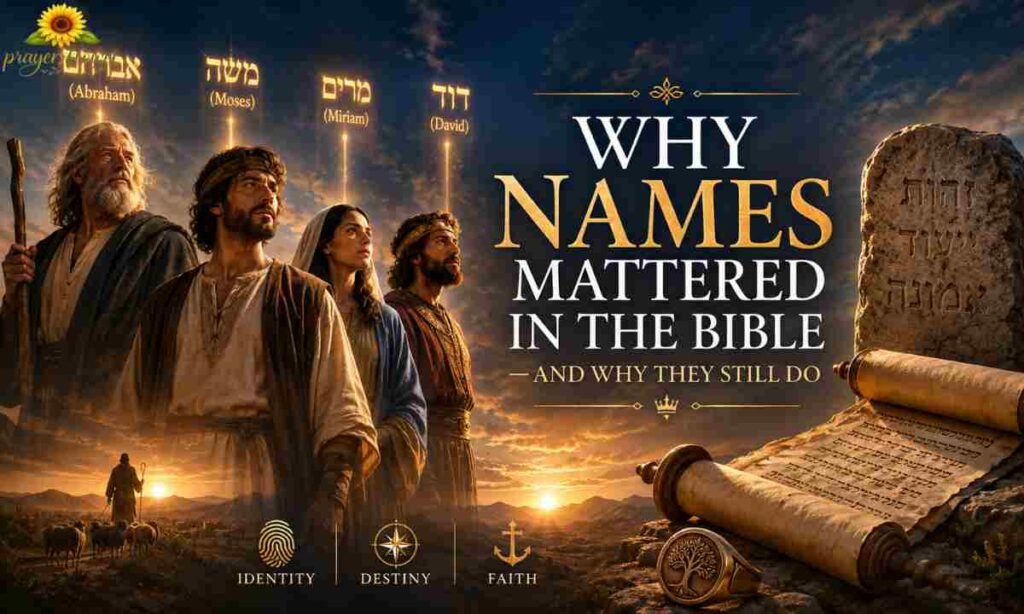
In biblical times, a name was never just a label. It was a destiny.
When God changed Abram’s name to Abraham (“father of many nations”), it wasn’t cosmetic — it was prophetic. When Jacob wrestled with God and received the name Israel (“one who strives with God”), his entire identity was rewritten. When Mary was told to name her son Jesus — from the Hebrew Yeshua, meaning “the Lord saves” — the name itself was the mission statement.
The Hebrew concept of shem (name) encompasses reputation, character, and legacy. A child named with intention carries that weight as a blessing, not a burden.
Understanding the biblical meaning of baby names is therefore an act of faith — of speaking something true and beautiful over a life before it has even begun.
“A good name is more desirable than great riches.” — Proverbs 22:1
How This Guide Is Organized
We’ve divided this guide into six sections:
- Popular Biblical boy names — with Hebrew/Greek roots, character stories, and scripture
- Popular Biblical girl names — with the same depth and detail
- Rare and forgotten biblical names worth reviving
- Unisex biblical names trending in 2026
- Names organized by meaning theme (strength, peace, grace, favor, wisdom, joy)
- Names to approach thoughtfully — biblical names with cautionary meanings
Part 1: Biblical Baby Boy Names and Their Meanings
Aaron — “Exalted” / “Mountain of Strength”
Origin: Hebrew (Aharon) Found in: Exodus 4–7 Character: Moses’ older brother and Israel’s first high priest. Aaron was a gifted speaker, a mediator, and a man set apart for sacred service. Scripture: “He will speak to the people for you, and it will be as if he were your mouth.” (Exodus 4:16) Spiritual declaration: A child named Aaron is called to lift others up, to speak with authority, and to stand in the gap.
Abraham — “Father of Many Nations”
Origin: Hebrew (Avraham) Found in: Genesis 12–25 Character: The patriarch of faith. Abraham left everything familiar on the word of God alone — a model of radical, costly obedience. Scripture: “I have made you a father of many nations.” (Genesis 17:5) Spiritual declaration: A life marked by faithful courage, generational impact, and divine promise.
Asher — “Happy” / “Blessed”
Origin: Hebrew (Asher, from esher — happiness) Found in: Genesis 30:13 Character: One of the twelve sons of Jacob. His mother Leah declared, “How happy I am!” when he was born. The tribe of Asher was associated with abundance and prosperity. Scripture: “Most blessed of sons is Asher; let him be favored by his brothers.” (Deuteronomy 33:24) Spiritual declaration: Joy, abundance, and the favor of God and people. Nickname options: Ash 2026 popularity: One of the fastest-rising biblical names for boys globally.
Caleb — “Wholehearted” / “Dog” (loyal devotion)
Origin: Hebrew (Kalev) Found in: Numbers 13–14 Character: One of only two Israelite spies who believed God when twelve others doubted. His unwavering faith earned him the promise: “I will bring him into the land he went to, and his descendants will inherit it.” Scripture: “My servant Caleb has a different spirit and follows me wholeheartedly.” (Numbers 14:24) Spiritual declaration: A life of bold faith, counter-cultural courage, and undivided loyalty to God.
Daniel — “God is My Judge”
Origin: Hebrew (Daniyel) Found in: The entire book of Daniel Character: One of the most compelling figures in Scripture — a young man taken captive to Babylon who refused to compromise his faith even under threat of death. His integrity was unshakeable. Scripture: “Daniel resolved not to defile himself.” (Daniel 1:8) Spiritual declaration: Integrity, moral strength, and divine wisdom in a world that pressures compromise.
Elijah — “My God is Yahweh”
Origin: Hebrew (Eliyahu) Found in: 1 Kings 17–2 Kings 2 Character: The fiery prophet who confronted the prophets of Baal, called fire from heaven, and was taken to God without dying. One of the most electrifying figures in all of Scripture. Scripture: “The God who answers by fire — he is God!” (1 Kings 18:24) Spiritual declaration: Prophetic boldness, Spirit-filled power, and uncompromising devotion to the one true God. 2026 note: Elijah ranks among the top most popular biblical baby names in the United States and United Kingdom.
Ezra — “Help” / “God is My Help”
Origin: Hebrew (Ezra) Found in: The book of Ezra Character: A scribe and priest who led Jewish exiles back to Jerusalem and restored the law of God to a broken people. He is a figure of revival, restoration, and the power of God’s Word. Scripture: “For Ezra had devoted himself to the study and observance of the Law of the Lord.” (Ezra 7:10) Spiritual declaration: A child who will be a restorer — one who helps rebuild what has broken down. Nickname options: Ez Trending: Among the top unique Hebrew baby names for boys in 2026.
Gabriel — “God is My Strength” / “God’s Champion”
Origin: Hebrew (Gavriel) Found in: Daniel 8–9; Luke 1 Character: The archangel who delivered the most important announcements in Scripture — to Daniel, to Zechariah, and to Mary. Gabriel carries the voice of heaven. Scripture: “I am Gabriel. I stand in the presence of God.” (Luke 1:19) Spiritual declaration: Strength, divine communication, and the privilege of carrying heaven’s message.
Isaac — “He Laughs” / “Laughter”
Origin: Hebrew (Yitzhak) Found in: Genesis 17–27 Character: The miracle son of Abraham and Sarah, born when his parents were far beyond natural childbearing age. His very name commemorates his mother’s astonished laughter at the impossible promise of God. Scripture: “Sarah said, ‘God has brought me laughter, and everyone who hears about this will laugh with me.'” (Genesis 21:6) Spiritual declaration: Joy in the impossible, the fruit of patient faith, and a life that makes others laugh with delight.
Josiah — “The Lord Heals” / “Fire of the Lord”
Origin: Hebrew (Yoshiyahu) Found in: 2 Kings 22–23 Character: One of the greatest kings of Judah, who came to power at age eight and ignited a national spiritual revival. He tore down altars, restored the Temple, and rediscovered the Book of the Law. Scripture: “Neither before nor after Josiah was there a king like him who turned to the Lord with all his heart.” (2 Kings 23:25) Spiritual declaration: A reformer, a revivalist, a child who will bring others back to God.
Levi — “Joined” / “Attached”
Origin: Hebrew (Levi) Found in: Genesis 29:34; Numbers (throughout) Character: Third son of Jacob and the founding father of Israel’s priestly tribe. The Levites were set apart for worship and the care of God’s dwelling place. Scripture: “Bring the tribe of Levi near and present them before Aaron the priest to assist him.” (Numbers 3:6) Spiritual declaration: Deep loyalty, sacred calling, and a heart set apart for worship.
Nathaniel — “Gift of God”
Origin: Hebrew (Netan’el) Found in: John 1:45–51 Character: One of Jesus’ disciples, also known as Bartholomew. Jesus described him as “an Israelite in whom there is no deceit” — one of the most beautiful compliments in all of Scripture. Scripture: “Here truly is an Israelite in whom there is no deceit.” (John 1:47) Spiritual declaration: A child of integrity, authenticity, and divine giftedness.
Noah — “Rest” / “Comfort”
Origin: Hebrew (Noach) Found in: Genesis 6–9 Character: The man who built an ark at God’s command when the earth had never seen rain. His obedience preserved all life. He is a picture of righteous faithfulness in a corrupt generation. Scripture: “Noah was a righteous man, blameless among the people of his time, and he walked faithfully with God.” (Genesis 6:9) Spiritual declaration: Faithfulness, peace, and a life that brings comfort to those around it. 2026 note: Noah remains the most popular biblical baby name in multiple countries worldwide.
Samuel — “God Has Heard” / “Asked of God”
Origin: Hebrew (Shemuel) Found in: 1 Samuel 1–28 Character: Born in answer to his mother Hannah’s desperate prayer, Samuel became one of Israel’s greatest judges and prophets. He anointed both Saul and David as king. Scripture: “The Lord came and stood there, calling as at the other times, ‘Samuel! Samuel!’ Then Samuel said, ‘Speak, for your servant is listening.'” (1 Samuel 3:10) Spiritual declaration: A child born of answered prayer, with ears tuned to hear the voice of God.
Solomon — “Peace” / “Peaceful”
Origin: Hebrew (Shlomo, from shalom) Found in: 1 Kings 1–11; Song of Solomon; Proverbs; Ecclesiastes Character: The wisest man who ever lived, son of David, builder of the Temple. Solomon’s reign was Israel’s golden age of peace, wisdom, and international influence. Scripture: “Ask for whatever you want me to give you.” Solomon answered, “Give your servant a discerning heart.” (1 Kings 3:5,9) Spiritual declaration: Wisdom, peace, and divine understanding.
Part 2: Biblical Baby Girl Names and Their Meanings
Abigail — “Father’s Joy” / “Source of Joy”
Origin: Hebrew (Avigayil) Found in: 1 Samuel 25 Character: A woman of rare wisdom and courage. When her foolish husband Nabal insulted King David, Abigail risked her life to make peace, and her wisdom saved her household. Scripture: “David said to Abigail, ‘Praise be to the Lord, the God of Israel, who has sent you today to meet me.'” (1 Samuel 25:32) Spiritual declaration: Wisdom, peacemaking, and the grace to defuse conflict with intelligence. Nickname options: Abby, Gail
Deborah — “Bee” / “Word” (Speaker of truth)
Origin: Hebrew (Devorah) Found in: Judges 4–5 Character: Israel’s only female judge and a military commander whose song of victory is one of the oldest poems in the Bible. She led a nation when no man would step up. Scripture: “She held court under the Palm of Deborah… and the Israelites went up to her to have their disputes decided.” (Judges 4:5) Spiritual declaration: Leadership, justice, and the courage to govern when others hesitate.
Esther — “Star” / “Hidden”
Origin: Persian/Hebrew (Hadassah in Hebrew, meaning myrtle) Found in: The book of Esther Character: A Jewish orphan who became queen of Persia and saved her entire people from genocide. Her courage is captured in the most quoted line in her story. Scripture: “Who knows whether you have not come to the kingdom for such a time as this?” (Esther 4:14) Spiritual declaration: Divine positioning, courage under pressure, and a life made for a moment. 2026 note: Esther is one of the top-rising rare biblical girl names in 2026.
Hannah — “Favor” / “Grace”
Origin: Hebrew (Channah) Found in: 1 Samuel 1–2 Character: A woman who wept so deeply in prayer that a priest thought she was drunk. Her desperate intercession for a child was answered with Samuel — and she gave him back to God. Scripture: “I prayed for this child, and the Lord has granted me what I asked of him.” (1 Samuel 1:27) Spiritual declaration: The fruit of fervent prayer, divine favor, and gracious generosity.
Lydia — “Noble Kind” / “From Lydia”
Origin: Greek/Latin Found in: Acts 16:14–15 Character: A businesswoman and merchant of purple cloth — wealthy, independent, and the first recorded European convert to Christianity. She opened her home as the first church in Europe. Scripture: “The Lord opened her heart to respond to Paul’s message.” (Acts 16:14) Spiritual declaration: Entrepreneurial grace, open-hearted generosity, and pioneering faith. For more on the remarkable women of the New Testament, the Blue Letter Bible’s women of the Bible resource offers excellent character studies.
Miriam — “Beloved” / “Sea of Bitterness” / “Wished-for Child”
Origin: Hebrew (Miryam) Found in: Exodus 2; 15 Character: Moses’ older sister who watched over him in the Nile, led Israel’s women in worship after the Red Sea crossing, and is called a prophetess. She is one of Scripture’s great female leaders. Scripture: “Then Miriam the prophet, Aaron’s sister, took a timbrel in her hand, and all the women followed her, with timbrels and dancing.” (Exodus 15:20) Spiritual declaration: Prophetic worship, sisterly protection, and Spirit-led celebration.
Naomi — “Pleasantness” / “Sweetness”
Origin: Hebrew (Naomi) Found in: The book of Ruth Character: A woman who lost her husband and both sons and returned home in grief — yet became the instrument through which Ruth found Boaz, and through whom the lineage of King David (and ultimately Jesus) continued. Scripture: “Where you go I will go, and where you stay I will stay.” (Ruth 1:16 — Ruth’s words to Naomi) Spiritual declaration: Loyalty, redemption, and the sweetness that survives even the bitterest seasons.
Phoebe — “Pure” / “Radiant” / “Bright”
Origin: Greek (Phoibe) Found in: Romans 16:1–2 Character: A deaconess of the early church, described by Paul as “a great help to many people.” She is believed to have personally delivered Paul’s letter to the Romans — the most theologically significant letter in history. Scripture: “I commend to you our sister Phoebe, a deacon of the church.” (Romans 16:1) Spiritual declaration: Faithful service, radiant character, and the honor of carrying great messages.
Keep Feeding Your Faith: Guardian Angel Prayer: Original Text, History, and Daily Devotion
Rachel — “Ewe” / “Gentle Strength”
Origin: Hebrew (Rachel) Found in: Genesis 29–35 Character: Jacob worked fourteen years to marry the woman he loved. Rachel bore Joseph and Benjamin — two of the most significant figures in Israel’s story. Scripture: “Jacob was in love with Rachel and said, ‘I’ll work for you seven years in return for your younger daughter Rachel.'” (Genesis 29:18) Spiritual declaration: Beloved, deeply valued, and worth the wait.
Rebecca — “To Tie Firmly” / “Captivating”
Origin: Hebrew (Rivkah) Found in: Genesis 24–27 Character: Chosen through a remarkable divine orchestration to be Isaac’s wife. Her hospitality — offering to water ten camels for a stranger — revealed her character before her beauty was even mentioned. Scripture: “She was very beautiful, a virgin; no man had ever slept with her.” (Genesis 24:16) Spiritual declaration: Generous hospitality, inner beauty, and a life that draws divine favor.
Ruth — “Friend” / “Companion” / “Refreshment”
Origin: Hebrew/Moabite (Ruth) Found in: The book of Ruth Character: A Moabite widow who chose to stay with her grieving mother-in-law rather than return to her own people. Her loyalty became the foundation of a beautiful love story with Boaz — and placed her in the direct lineage of Jesus Christ. Scripture: “Your people will be my people and your God my God.” (Ruth 1:16) Spiritual declaration: Covenant loyalty, faithful love, and a life that builds something eternal.
Sarah — “Princess” / “Noble Lady”
Origin: Hebrew (Sarah, changed from Sarai) Found in: Genesis 11–23 Character: Abraham’s wife, who laughed at the impossible promise of a child at age ninety — and then held that child in her arms. She is the mother of nations. Scripture: “Is anything too hard for the Lord?” (Genesis 18:14) Spiritual declaration: Nobility, the fruit of impossible faith, and laughter born of God’s faithfulness.
Part 3: Rare and Forgotten Biblical Names Worth Reviving
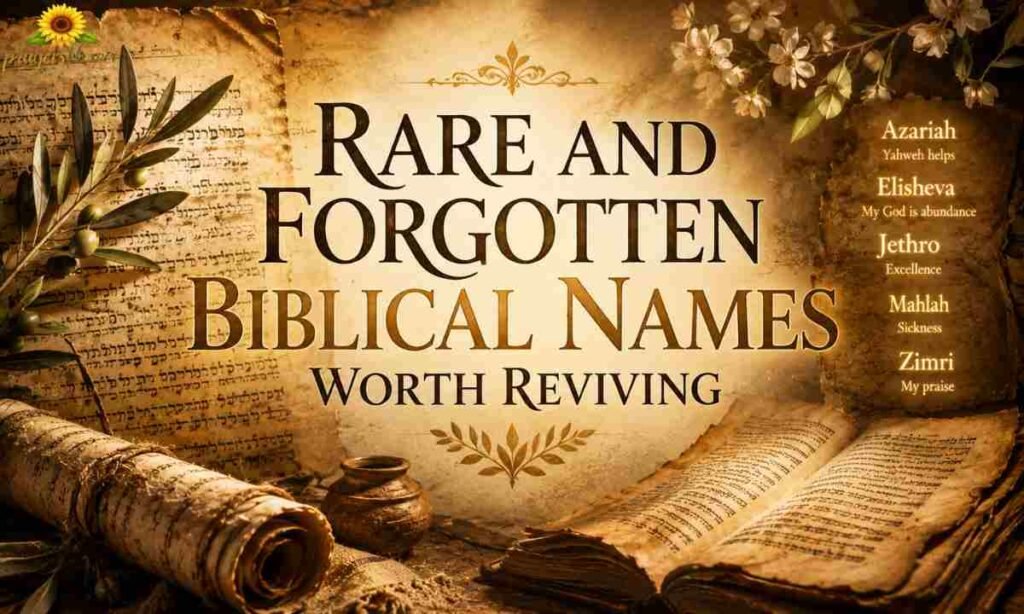
These unique biblical baby names appear in Scripture but have largely disappeared from modern use — making them extraordinary choices for parents seeking something both meaningful and distinctive.
| Name | Gender | Meaning | Biblical Connection |
| Keziah | Girl | Cassia (a fragrant spice) | Job’s second daughter, born after his restoration (Job 42:14) |
| Jemima | Girl | Dove / Little dove | Job’s first daughter after restoration — a symbol of peace and beauty |
| Tirzah | Girl | Pleasantness / Delight | Daughter of Zelophehad, who boldly claimed her inheritance (Numbers 27) |
| Selah | Unisex | Pause and reflect / Rock | Musical notation used throughout the Psalms |
| Jubilee | Unisex | Ram’s horn / Year of freedom | The Jubilee year in Leviticus — liberation, restoration, new beginnings |
| Shiloh | Unisex | Place of peace / He to whom it belongs | Ancient place of sanctuary; also a Messianic title |
| Zillah | Girl | Shadow / Shade | Wife of Lamech (Genesis 4:19) — evocative and deeply rare |
| Perez | Boy | Breakthrough | Son of Judah; ancestor of David and Jesus (Genesis 38:29) |
| Reuel | Boy | Friend of God | Father-in-law of Moses; a man of hospitality and wisdom |
| Keturah | Girl | Incense / Fragrance | Abraham’s wife after Sarah’s death (Genesis 25:1) |
| Azariah | Boy | The Lord has helped | A faithful companion of Daniel in Babylon |
| Jochebed | Girl | The Lord is my glory | Moses’ mother — who hid her son in faith and received him back |
Part 4: Unisex Biblical Names Trending in 2026
The trend toward gender-neutral naming continues to grow in 2026, and names with spiritual roots lend themselves particularly well to unisex use, as nature, virtue, and peace themes carry universal meaning that transcends gender.
| Name | Meaning | Biblical Origin |
| Shiloh | Peace / Place of rest | Joshua 18; also a Messianic reference in Genesis 49:10 |
| Eden | Delight / Place of pleasure | Genesis 2 — the original garden of God |
| Asher | Happy / Blessed | Genesis 30 — increasingly used for girls |
| Selah | Pause / Reflect | Used 71 times in Psalms — meditative and musical |
| Micah | Who is like God? | The prophet Micah; also a Levite in Judges |
| Remy/Remi | Oarsman (connected to Remiel, an angel) | Apocryphal; increasingly popular in Christian families |
| Zion | Highest point / Monument | Used over 150 times in Scripture; the city of God |
Part 5: Biblical Names Organized by Meaning Theme
For parents who want their child’s name to carry a specific spiritual declaration, here are biblical names by meaning:
Names Meaning Strength or Power
- Gabriel — God is my strength
- Uzziah — My strength is the Lord
- Gideon — Mighty warrior
- Samson — Sun / Man of strength
- Mighty (derivative of El Gibbor)
Names Meaning Grace or Favor
- Hannah — Grace, favor
- Joanna — God is gracious
- John — The Lord is gracious
- Charis (Greek) — Grace (the root of the word charisma)
- Anna — Grace / Favored
Names Meaning Peace
- Solomon — Peaceful
- Absalom — Father of peace
- Shiloh — Peace, tranquility
- Irene (used in early Christian communities) — Peace
Names Meaning Joy or Happiness
- Asher — Happy, blessed
- Jubilee — Joy, celebration
- Isaac — He laughs
- Joy — A fruit of the Spirit (Galatians 5:22)
- Jemima — Dove (symbol of gentle joy)
Names Meaning Light or Radiance
- Phoebe — Radiant, shining
- Elior — My God is my light
- Neri — My lamp
- Uriah — God is my light
Names Meaning Gift of God
- Nathaniel — Gift of God
- Matthew — Gift of the Lord
- Elnathan — God has given
- Zebedee — God’s gift
For families wanting to explore the original Hebrew and Greek roots of these and hundreds of other Scripture-based baby names, Strong’s Concordance at BibleHub is the definitive free resource — searchable by word, meaning, and root.
Part 6: Biblical Names to Approach Thoughtfully
Not every name in the Bible carries a positive meaning. Scripture records history honestly — including names given in pain, failure, or foreboding. These are worth knowing:
| Name | Literal Meaning | Why to Consider Carefully |
| Nabal | Fool | 1 Samuel 25:25 — Abigail literally says, “His name means fool, and folly goes with him” |
| Ichabod | The glory has departed | 1 Samuel 4:21 — named in grief at Israel’s darkest hour |
| Marah | Bitter | Naomi briefly renamed herself this in her grief (Ruth 1:20) |
| Jabez | He causes pain | 1 Chronicles 4:9 — though Jabez overcame his name through prayer |
The story of Jabez is actually encouraging — despite a name that meant sorrow, his prayer changed his destiny. But most parents will prefer to give their child a name they won’t have to pray to overcome.
How to Choose a Biblical Name That’s Right for Your Family
Here are five questions to guide your decision:
1. What do you want declared over your child’s life? Names carry spiritual weight. Esther speaks of divine positioning. Noah speaks of peace and rest. Samuel speaks of answered prayer. What do you want your child’s name to announce?
2. Does the name have a character you’d want your child to emulate? Some biblical characters are inspiring. Others are cautionary. Look at the full story, not just the meaning.
3. How does it sound with your family name? A beautiful biblical name with deep meaning still needs to work practically.
4. Can it carry your child into adulthood? Esther works in a boardroom. Keziah works in a courtroom. Test it there, not just in the nursery.
5. Does it feel like a blessing or a burden? The best biblical baby names feel like a gift — something a child will grow into rather than resent.
Frequently Asked Questions
What is the biblical meaning of baby names?
Biblical baby names carry Hebrew or Greek roots that declare identity, character, and divine purpose over a child’s life.
Which biblical baby name means “Gift of God”?
Nathaniel, Matthew, and Elnathan all carry the beautiful meaning of “Gift of God” in Hebrew.
What are the most popular biblical baby names in 2026?
Noah, Elijah, Hannah, Esther, and Asher are among the most searched and trending biblical baby names this year.
Are there rare biblical baby names that are still beautiful?
Yes — names like Keziah, Jubilee, Tirzah, Azariah, and Reuel are rare, deeply meaningful, and ready for a comeback.
What biblical baby names mean strength?
Gabriel (“God is my strength”), Gideon (“mighty warrior”), Samson (“man of strength”), and Uzziah (“my strength is the Lord”) all carry powerful meanings.
Can I use a biblical name if I’m not Christian?
Absolutely — biblical names are rooted in ancient Hebrew and Greek culture, making them historically rich choices for any family regardless of faith background.
Final Word: A Name Is a Prayer
When you give your child a biblical name, you are doing something ancient and sacred. You are joining a long line of parents who believed that the words spoken over a life matter — that a name can be a calling card from heaven, a daily reminder of identity and destiny.
Whether you choose the tried-and-true comfort of Noah or Hannah, the bold singularity of Jubilee or Azariah, or the quiet depth of Ruth or Levi, you are wrapping your child in story, scripture, and spiritual intention.
In a world full of noise, give your child a name that means something. Give them a name that points to something greater than themselves.
Father, speak this name over every reader the way You have always spoken — with love and with purpose.

John Carrol is a Christian writer and prayer minister with over a decade of experience in faith-based content, devotional writing, and spiritual encouragement. Rooted in Scripture and a lifelong love of intercessory prayer, John created PrayersFlower to help believers find the right words when their own run out. His writing draws from pastoral study, personal faith practice, and a deep conviction that prayer is the most powerful act available to the human heart. When he is not writing, John is found in quiet study of the Word, mentoring young believers, and serving his local church community.